Expertise lives in the work.
Project files and expert decisions hold knowledge that open-web training alone cannot supply.
THE SPATIAL INTELLIGENCE LAB
An AI research lab exploring how the built world works—and what happens when it changes.
Explore the research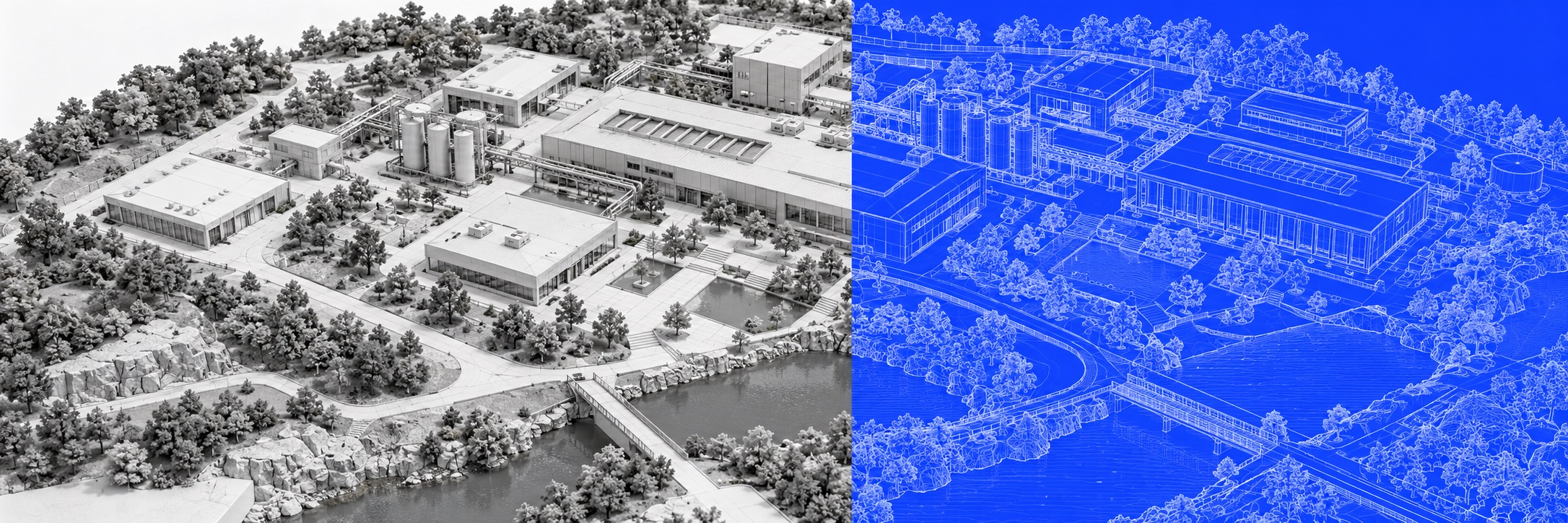
The built world is
a system of systems.
Buildings, streets, infrastructure, and the spaces between them. Change one part, and you can alter how people move, resources flow, and an environment functions.
Generating a shape is one step. Spatial intelligence must understand these relationships—and compute the consequences of change.
Frontier models are powerful starting points. Our thesis: built-world intelligence also requires knowledge, tools, and evaluation grounded in the domain.
Project files and expert decisions hold knowledge that open-web training alone cannot supply.
Models must connect shapes to structure, services, regulations, and design intent.
Physical consequences demand geometric checks, engineering analysis, and practitioner judgment.
Arcol is where knowledge
becomes geometry.
Its authoring platform connects spatial models, live metrics, and the people making design decisions. That gives the lab a rare starting point: an environment where intelligence can learn to do useful work.
Work with practitioners to understand why designs succeed and where they fail.
Editable models and connected metrics offer a place to take actions and measure results.
Test in design workflows. With permission, use expert corrections to improve the next model.
Our research agenda: connect spatial understanding to computation, so machines can reason about the built world and test the consequences of change.
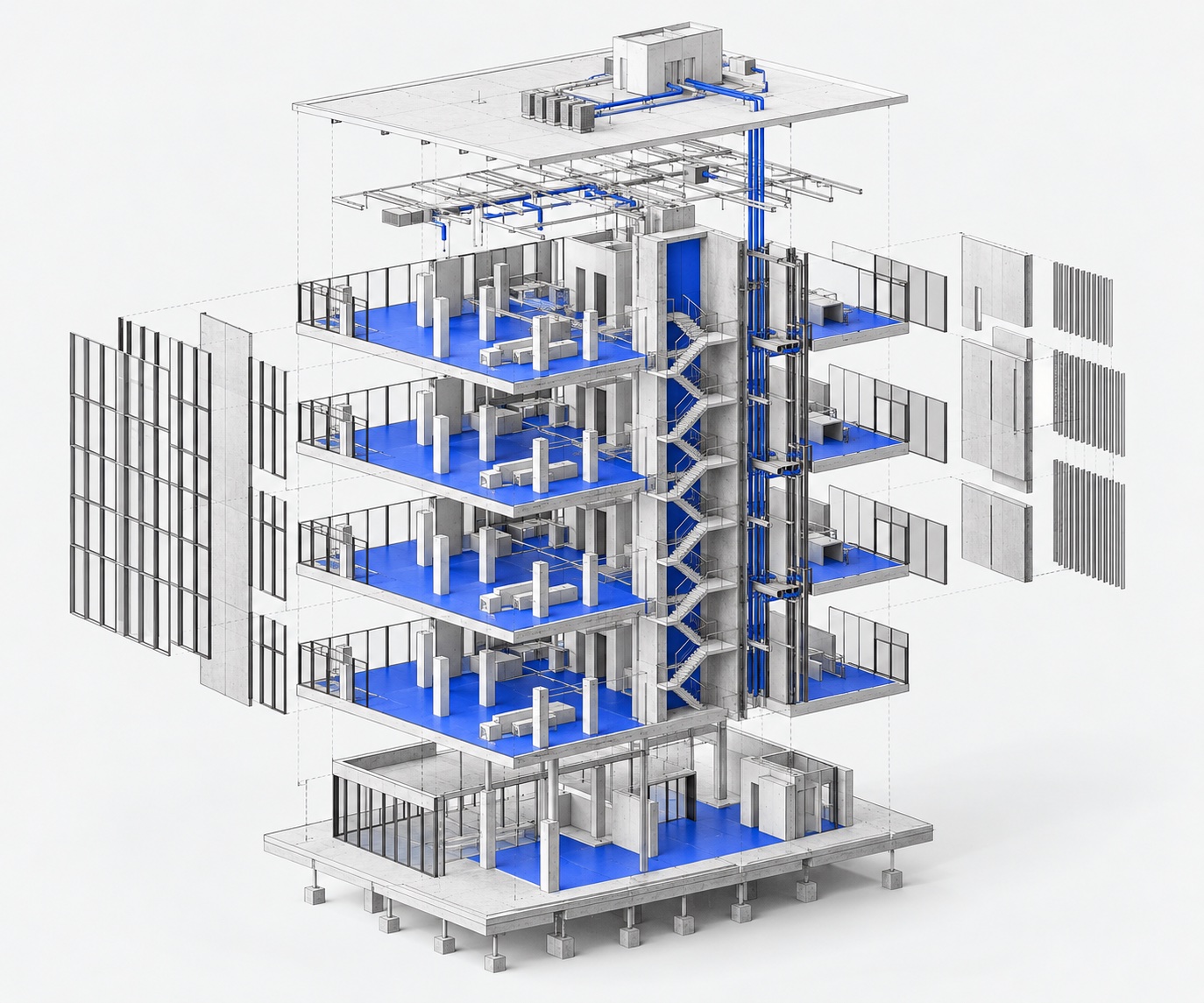
Represent geometry, components, and their relationships in coherent world models that can update as environments change.
Trace constraints and dependencies across spaces, structures, and infrastructure. Predict the effects of a change, then test those predictions against domain tools and expert review.
Use geometric operations and analysis tools to create, edit, and evaluate designs. Measure reliability on unfamiliar environments and tasks.
Spatial models and the decisions behind them.
Build models. Test against domain constraints.
Expert feedback informs the next research cycle.
Physical AI needs to understand
where it acts.
Spatial understanding gives Physical AI the context to plan, reason, and act across the built world.
If our research succeeds, it could become a foundation for others to build on—across the life of the built world.
Reason about access, assembly sequences, and changing site conditions.
Connect infrastructure and environmental systems to maintenance, energy use, and adaptation.
Give Physical AI structured environments to explore tasks and consequences.
Intelligence for how we
design, build, and inhabit.
The built world.
The next frontier.